Buying Batik Fabric Wholesale: A Practical Guide
A practical guide to buying batik fabric wholesale: planning quantities, keeping batches consistent, evaluating prices per metre, and checking delivery.
Buying batik fabric wholesale is a different discipline from picking a length of cloth in a shop. You are not choosing one motif for one outfit; you are committing to hundreds of metres that must arrive on time, match each other, and work for the people who will eventually wear or resell them. That shift — from a single purchase to a repeating supply — is where most first-time wholesale buyers lose money, usually through over-ordering, mismatched batches, or a price that looked attractive until delivery and defects were counted. This guide walks through the process end to end: how to size an order, how to build an assortment that actually sells, how to keep colour and quality steady across batches, and how to read a per-metre price honestly. It is written for resellers, uniform providers, fashion brands, and institutional buyers who need reliable batik fabric wholesale terms rather than one-off retail deals.
What makes batik fabric wholesale different
Three things change the moment you buy at volume. First, the unit of decision is the specification, not the sample: fabric type, width, motif file, colour reference, and finishing all have to be written down, because you will not be standing next to the roll when it is produced. Second, wholesale orders usually move in stages rather than in one shipment, which makes consistency between batches a real risk rather than a theoretical one. Third, the relationship matters more than the transaction — a supplier who understands your demand pattern is far more useful when a deadline moves than the one who simply quoted the lowest figure.
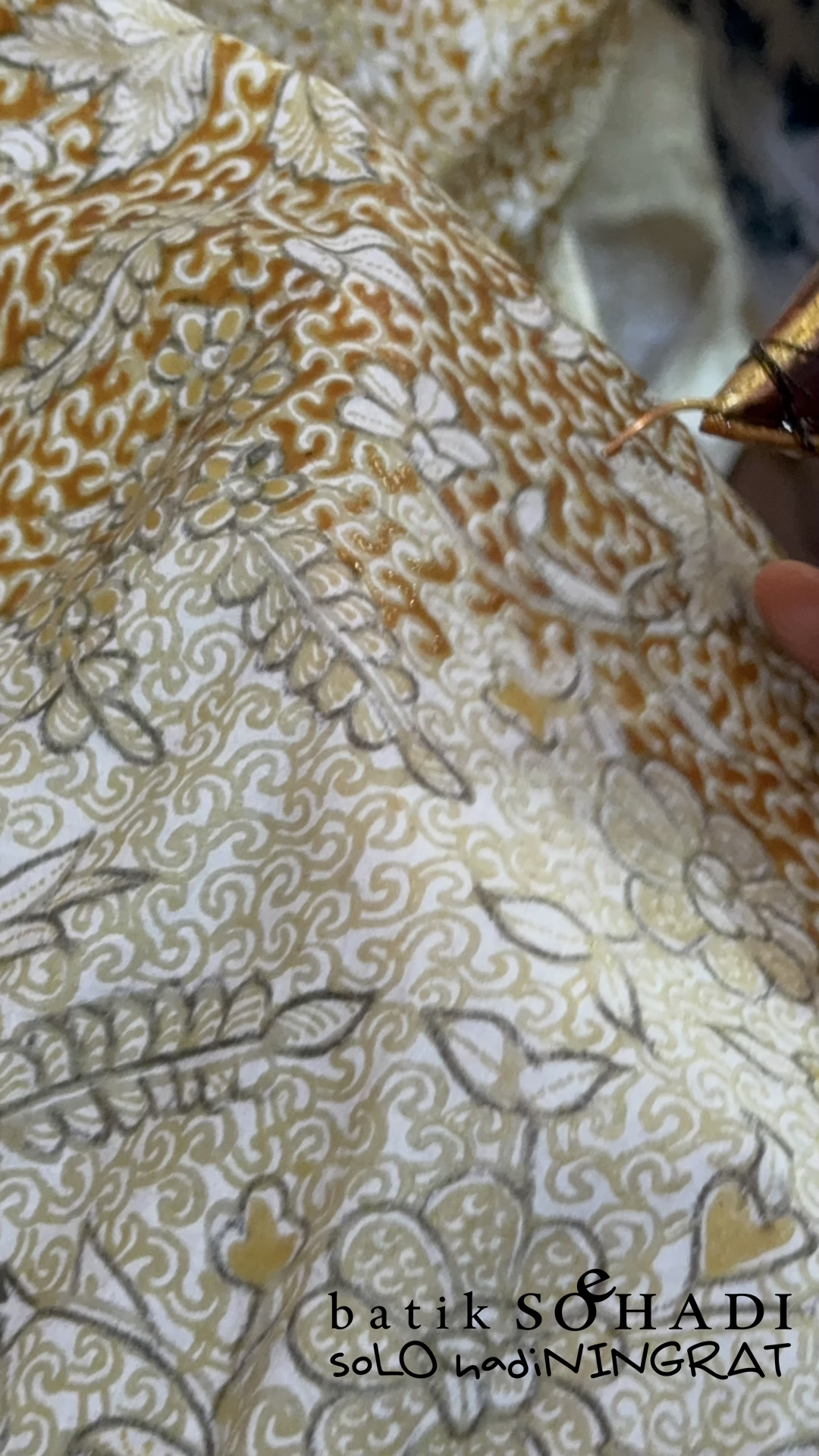
The underlying product does not change. Batik is still made through printing, stamping, hand-drawn work, or handprinting, and the technique you choose drives both the look of the cloth and the effort behind it. What changes is that you are now buying a production plan, and the plan needs the same scrutiny you would give any other manufacturing input.
Plan quantity around demand, budget, and storage
Start with demand rather than with price. Work out how many metres your customers, staff, or production line will realistically consume in the next cycle, then add a modest buffer for cutting waste, size runs, and replacements. Ordering only what you can immediately sell keeps cash free; ordering far beyond your storage plan risks creases, dust, and colour fade from poor handling.
Storage is the constraint buyers overlook most often. Fabric should be stored flat or on rolls in a dry, shaded space, away from direct sunlight and humidity. If your room can only hold a few dozen rolls comfortably, that number — not the size of the discount — is your true order ceiling.
Ask about the minimum order quantity early. In batik production, MOQ depends on the fabric and on the complexity of the motif, so a simple printed repeat will have a different threshold from a detailed stamped design; a good supplier will tell you the real minimum for your specific combination instead of quoting a single number for everything. For genuinely large requirements, discuss staged production so you receive fabric in tranches that match your sales rhythm. Quantities are easier to estimate with a written calculation — our guide on how to calculate uniform fabric requirements shows the method.
Build an assortment across fabrics and motifs
Wholesale buyers rarely need one fabric. A sensible assortment matches materials to customer segments: cotton and prima for daily wear and school uniforms, primissima or lampion for events where a smoother surface matters, rayon for relaxed clothing that needs drape. Each material behaves differently in comfort, care, and appearance, so a mixed assortment spreads your risk instead of betting everything on one hand-feel. Full characteristics are listed on the fabric materials page.
Motifs need the same spread. Classic patterns sell steadily to institutional buyers, while bolder contemporary motifs move better in retail. Avoid filling the whole order with variations of one design; if that motif does not land, nothing does. For corporate and institutional customers, branded cloth is worth considering: a subtle repeat built around a logo turns fabric into identity, and the options are covered in logo batik fabric.
If none of the standard motifs fits, custom production is the route — from concept and mockup through to bulk output. It takes longer, so build the design phase into your calendar rather than treating it as an afterthought. See custom batik for how that workflow runs.
Keep quality consistent between batches
Consistency is the single hardest part of repeat batik fabric wholesale. A roll that is half a shade warmer than the one before it becomes a visible problem once garments are cut from both. Protect yourself with a written specification held on file: fabric composition, width in centimetres, colour reference, motif file version, and finishing method. When the next order is placed, send the same document again rather than describing it fresh in a message.
Ask the supplier how colour and width are controlled between production runs, and what happens when a batch falls outside tolerance. In a structured production line, measurement and quality checking happen before packing, not after complaints arrive — the production page sets out those stages in order. Keep a small swatch from the first accepted batch as a physical reference; a fabric sample in an envelope is worth more than any written description when a new shipment lands.
Timing affects consistency too. Fabrics produced months apart can differ because of variations in base cloth or dye lots. Where possible, keep reorder intervals regular and avoid comparing a new batch against cloth that has already been washed and worn.
Evaluate price per metre honestly
Compare quotes on identical specifications before comparing numbers. A lower price per metre means little if the cloth is narrower, the base fabric lighter, or the price excludes packaging and freight. Read every quote against the same checklist: material, width, motif complexity, finishing, packaging, and delivery cost. Our price list gives a transparent per-metre reference across the materials we supply, starting from Rp20,000 per yard on the entry-level option.
The cheapest offer is rarely the best value once you account for inconsistency. Replacing a rejected batch costs more than the saving, and a supplier who cannot maintain quality will quietly erode your margin over time. Ask what is included in the quoted figure, whether it changes at higher volumes, and how defects are handled. Then compare the total delivered cost, not the headline rate.
Equally, resist the opposite mistake: assuming the highest price guarantees the best cloth. Price should be explained by technique, material, and complexity. A supplier who can break the number down is usually a supplier who understands their own process.
Logistics, delivery, and what to check on arrival
Agree the production window and delivery estimate in writing before you pay, including how they were calculated. Rushed production is where finishing gets skipped, so build in time for the quality check rather than scheduling the shipment to arrive the day you need it.
When goods arrive, check before you sign off: roll count against the packing list, actual width measured at several points, colour compared with your retained swatch, and a scan for holes, stains, or crease damage along the visible length. Keep a short length of every accepted batch as your quality reference, and record the check in writing with photos — not to start a dispute, but so that any later discussion starts from evidence rather than memory. Confirm how replacements or claims are handled while the relationship is still new; that conversation is far easier before a problem exists than after one.
From one order to a long-term supply relationship
The buyers who get the best terms over time are rarely the ones who squeeze hardest on the first order. Share your forecast, pay attention to agreed dates on both sides, and give feedback on quality promptly — specific notes on colour, width, or finishing are far more useful than a general verdict. A supplier who understands your demand pattern can plan capacity, flag base-cloth shortages early, and hold your motif files ready for the next run.
Batik Soehadi manufactures and supplies batik fabric for retail, wholesale, custom, and B2B requirements, with production capacity above 2,500 metres per day across two factory locations in Sragen, Central Java. Wholesale buyers work with the same design and production team from first consultation through to dispatch, which is what keeps repeat orders recognisable as the same product.
Frequently asked questions
How do I know a wholesale price is fair? Compare quotes from several suppliers for the identical material, width, and motif complexity, then add packaging and delivery costs before judging. A price that excludes either is not comparable.
What is a typical minimum order for wholesale batik fabric? It depends on the fabric and the complexity of the motif, so ask for the minimum on your specific combination rather than accepting a general figure. Discuss staged production if your first order exceeds what you can store or sell.
Can I order different fabrics and motifs in one shipment? Yes, and it is usually sensible. Mixing materials for different customer segments keeps your assortment flexible; just make sure each fabric is specified separately so consistency can be checked per group.
How many metres should I keep as a buffer? It depends on your cutting loss and the variability of your sales, but some margin beyond the calculated requirement protects you when a size run or a replacement is needed after the batch has closed.
What if a batch does not match the first one? Raise it against your written specification and retained swatch, with measurements and photos attached. Reputable suppliers resolve this against the original document — which is exactly why that document should exist before the second order is placed.
Good wholesale buying is mostly preparation: quantities sized to real demand, an assortment matched to real customers, a specification written down, and a delivery checked properly. Do that consistently and the fabric becomes the least unpredictable part of your business. If you are weighing materials, quantities, or a custom motif for your next order, talk it through with the Batik Soehadi team on WhatsApp at +62 812-3456-1663.
Written by
Agus Soehadi
Head of Production & Textile Specialist at Batik Soehadi
Batik textile practitioner with over 20 years of experience in fabric standardisation, precision flatbed printing, and SNI ISO colorfastness compliance.
Discuss a Wholesale Order
Our team can help you choose batik fabric, motifs, materials, and custom requirements within your budget.
“Kualitas batiknya bagus sekali, karyawan sangat puas dengan kenyamanan bahannya. Harga juga terjangkau!”
“Sudah langganan beberapa kali, tidak pernah mengecewakan. Produksi tepat waktu dan kualitas konsisten.”
“Pelayanan cepat dan responsif. Desain custom sesuai permintaan, hasil jahitan rapi. Sangat recommended!”